Blind Test: Dell Chromebook 3120 vs Ugreen Nasync Dh2300 - Which is Actually Better?
At first glance, this comparison looks almost unfair. The Dell Chromebook 3120 is a compact, older ChromeOS laptop built for schools and basic everyday computing. The Ugreen Nasync Dh2300, by contrast, is a two-bay NAS, or network-attached storage device, designed to store files, back up devices, and act as a personal cloud on a home network. They are not direct rivals in the usual sense.
And yet buyers often cross-shop products like these for a simple reason: they are trying to solve a practical problem on a budget. One person wants a cheap machine for browsing, writing, email, and streaming. Another wants a reliable way to store family photos, back up phones and laptops, and cut back on monthly cloud storage fees. In both cases, the buyer wants usefulness, value, and something that will not become frustrating after a week.
This blind test treats both products the way real buyers do: not as spec sheets, but as tools. It looks at how each device fits into daily life, what compromises come with the low price, and which one is actually the better purchase depending on what matters most.
What These Two Products Really Are
The first thing to clear up is category confusion. The Dell Chromebook 3120 is a traditional portable computer. It has an 11.6-inch display, keyboard, trackpad, battery, and ChromeOS. It is meant for web-based tasks, lightweight school or office work, and portable use around the house, classroom, or coffee shop.
The Ugreen Nasync Dh2300 is not a laptop at all. It does not replace a notebook in the conventional sense. Instead, it is a small storage server with two drive bays, designed to live on a desk or shelf and stay connected to a router. It can hold large amounts of data, stream media, manage backups, and provide remote file access through apps and a web interface.
That means the question is not simply which one is better. The real question is which one does a more convincing job of solving the problem the buyer actually has.
Quick Comparison Table
| Feature | Dell Chromebook 3120 | Ugreen Nasync Dh2300 |
|---|---|---|
| Product type | Budget laptop | 2-bay NAS / personal cloud device |
| Main purpose | Web browsing, documents, email, streaming, schoolwork | File storage, backups, media serving, private cloud access |
| Portability | Highly portable | Stationary desktop device |
| Display | 11.6-inch screen | No built-in display |
| Operating environment | ChromeOS | UGOS Pro / NAS software environment |
| Storage approach | Small internal eMMC storage | User-installed hard drives or SSDs in two bays |
| Best for | Students, casual users, basic mobile computing | Households, creators, small offices, backup-focused users |
| Upgrade potential | Very limited | Much greater storage scalability |
| Learning curve | Very easy | Moderate for beginners |
| Long-term value | Depends on low expectations | Depends on whether storage and backup needs are real priorities |
Dell Chromebook 3120 Review: A Basic Laptop That Shows Its Age
The Dell Chromebook 3120 was designed during the era when schools needed durable, inexpensive laptops that students could use for web-based assignments and cloud-first workflows. That background still defines the device today. It is compact, simple, and generally easy to live with if expectations stay modest.
Design and Everyday Usability
One of the Chromebook’s strongest points is its practicality. The chassis was built with education use in mind, which means it tends to feel sturdy rather than stylish. For buyers who want a machine to toss into a backpack, keep in the kitchen, or hand to a child for homework, that ruggedness is still appealing.
The keyboard is adequate for short writing sessions, emails, and school documents. The small footprint makes it easy to carry, though it also means a smaller typing area and a more cramped feel for adults used to 13-inch or 14-inch laptops. The screen is functional rather than impressive, suitable for documents and browsing but not something anyone would call vibrant by current standards.
Performance in Real-World Use
This is where the age of the Dell Chromebook 3120 becomes impossible to ignore. For single-tab browsing, webmail, simple Google Docs work, and video playback at modest settings, it can still manage. But the modern web is heavier than it used to be. Sites are more complex, browser tabs eat more memory, and video conferencing places more strain on entry-level hardware.
As a result, the device feels best suited to users who keep workloads light. Someone writing documents, checking email, reading articles, and streaming occasionally may still find it serviceable. Someone juggling many tabs, relying on richer web apps, or expecting quick multitasking will likely find it slow and limiting.
Software Experience
ChromeOS remains the saving grace of many older Chromebooks because it is generally streamlined and easy to understand. It boots quickly, emphasizes cloud storage, and requires very little maintenance. For buyers who do not want to worry about antivirus software, complex settings, or desktop clutter, that simplicity remains a strong advantage.
Still, the software experience depends heavily on internet-based services. Buyers who are comfortable living in a browser may find that fine. Buyers who need flexible offline workflows, more traditional desktop applications, or heavier local storage will feel those constraints almost immediately.
Discover deals on Laptops & Computers — updated daily.
Browse Now →Who the Dell Chromebook 3120 Still Makes Sense For
It makes sense for a narrow but real audience: budget-minded users who need a basic machine for casual computing and understand exactly what they are getting. It can work as a child’s first laptop, a backup travel machine, or a low-cost writing-and-browsing device. It is far less convincing as a long-term primary computer for demanding users.
Pros and Cons: Dell Chromebook 3120
- Pros
- Portable, compact, and generally durable
- Simple ChromeOS experience with low maintenance
- Good fit for lightweight tasks like browsing, documents, and email
- Usually inexpensive on the used or refurbished market
- Comfortable for buyers who want a straightforward secondary laptop
- Cons
- Very dated hardware by modern standards
- Limited multitasking ability
- Small, basic display with modest viewing experience
- Minimal internal storage and little upgrade flexibility
- Not ideal for long-term primary use if workloads grow
Ugreen Nasync Dh2300 Review: A Budget NAS With Surprisingly Broad Appeal
The Ugreen Nasync Dh2300 addresses a completely different kind of need, but in some ways it is the more ambitious product. Rather than trying to be a cheap computer, it tries to be the digital hub of a household or small office. Buyers who have ever worried about photo backups, scattered external drives, shared family storage, or rising cloud subscription costs will immediately understand its purpose.
What It Does Well
The main appeal of the Dh2300 is centralization. Instead of storing files across laptops, phones, portable SSDs, and multiple cloud services, the NAS brings everything into one place. Family photos, work documents, downloaded media, device backups, and archived projects can all live in a single managed system. For many buyers, that is not just convenient; it reduces the chance of lost files and makes digital life easier to organize.
A two-bay layout also gives it practical flexibility. It can be set up for more capacity, or configured with redundancy so that one drive can protect against the failure of the other. That kind of protection matters to buyers who care about photos, video collections, work archives, or business records.
Daily Experience and Setup Reality
The Dh2300 is marketed toward users who want a more approachable NAS, and that is where it has a real advantage over many older, more intimidating storage devices. Even so, buyers should not confuse beginner-friendly with effortless. Drives still need to be installed. The device needs to be connected to a network. The buyer still has to think about storage configuration, user permissions, backup behavior, and remote access settings.
Once configured, however, the real-world experience can be extremely rewarding. Phones can back up automatically. Laptops can save to a shared location. Media can be streamed around the house. Important folders can be synchronized or protected. For households with more than one computer or more than one person generating photos and documents, the practical benefit grows quickly.
Performance and Limitations
The Dh2300 is best understood as an entry-level NAS with modern conveniences rather than a powerhouse for demanding enthusiasts. For straightforward file serving, backup duties, and home media use, it should be more than capable. For users expecting enterprise-level performance, advanced virtualization, or ultra-fast multi-gig networking, it will feel limited.
That distinction matters because many buyers do not actually need the high-end features often advertised by premium NAS systems. They need dependable storage, a simple sharing experience, and something that can run quietly without constant maintenance. In that role, the Dh2300 is much easier to defend.
Long-Term Ownership Value
This is where the Ugreen begins to look stronger than the Chromebook in a broader sense. A laptop with dated hardware usually feels older every year. A NAS with enough storage and competent software can become more useful over time, especially as more devices join the household. The buyer is investing not just in a device, but in an infrastructure choice.
That said, the real cost is higher than it first appears because the buyer must also purchase drives. That added expense is not a flaw, but it should be part of the buying decision. A NAS without drives is only half the purchase.
Pros and Cons: Ugreen Nasync Dh2300
- Pros
- Useful as a central backup and storage hub for multiple devices
- Scalable storage compared with a cheap laptop’s limited internal space
- Can reduce reliance on paid cloud subscriptions
- Supports real-world household needs like photo backup and media access
- More future-friendly if storage needs are expected to grow
- Cons
- Not a laptop and not a direct PC replacement
- Requires separate hard drives or SSDs
- Setup is easier than older NAS products, but still not beginner-proof
- Less appealing for users who only need a simple personal device
- Entry-level networking and enthusiast limits may matter to advanced users
Blind Test Verdict: Which Feels Better in Actual Use?
If someone used both products without knowing the names, the impressions would be completely different. The Chromebook would feel instantly familiar, portable, and limited. The NAS would feel initially more technical, but potentially more valuable once it started managing backups and shared storage.
For a buyer who needs a machine to write school papers, browse the web, and answer email on the couch, the Dell Chromebook 3120 is the more sensible pick. It is direct, simple, and immediately usable. There is no learning curve worth mentioning.
Discover deals on Laptops & Computers — updated daily.
Browse Now →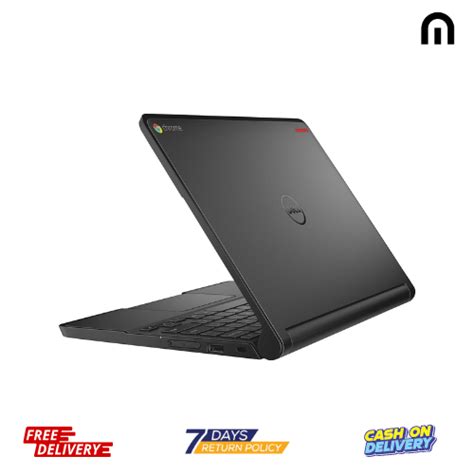
For a buyer thinking about the digital needs of an entire household, the Ugreen Nasync Dh2300 makes the stronger impression. It solves a bigger problem. It protects data, creates shared storage, and adds capabilities that a cheap laptop simply cannot match.
In that sense, the Ugreen is arguably the better product overall, while the Dell is the better cheap laptop for someone who specifically needs a laptop.
What Buyers Usually Care About Most
Most people do not buy technology for abstract reasons. They buy it to make a recurring inconvenience go away. That practical lens makes the choice clearer.
For Students and Casual Home Users
These buyers care about typing comfort, battery life, portability, a usable screen, and whether basic web tasks run without drama. They want to open the device and get to work. Here, the Chromebook aligns much more closely with the need.
For Families and Multi-Device Households
These buyers care about photo backups, shared folders, organizing files, protecting memories, and avoiding the chaos of files scattered everywhere. They want a central place for everything. The NAS is built exactly for that.
For Budget-Conscious Buyers
Budget shoppers care not only about price, but about regret. A cheap product is not good value if it solves the wrong problem. The Chromebook is cheaper in total cost and easier to understand. The NAS costs more once drives are included, but can offer greater long-term value if its storage and backup features will actually be used.
Buying Guide: How to Choose Between Them
Because these products serve different needs, the best buying advice is to ask a short series of practical questions.
Choose the Dell Chromebook 3120 if:
- A portable keyboard-and-screen device is essential
- The main tasks are web browsing, school portals, documents, email, and light streaming
- The buyer wants the simplest possible setup
- The budget is very limited
- The device is intended as a backup laptop, child’s device, or secondary machine
Choose the Ugreen Nasync Dh2300 if:
- The real need is storage, backup, and file access rather than mobile computing
- Several phones or computers in the home need centralized backup
- The buyer wants more control over personal data
- There is interest in home media storage or a private cloud setup
- Paying more upfront in exchange for longer-term usefulness makes sense
Questions Worth Asking Before Buying
- Does the buyer need a screen and keyboard every day? If yes, the NAS is the wrong starting point.
- Are storage limits, backup worries, or cloud subscription fatigue the real issue? If yes, the NAS becomes much more compelling.
- Will the buyer tolerate an older, slower machine if it is cheap? If no, the Chromebook may disappoint.
- Will the buyer actually set up and maintain a NAS? If no, its theoretical value may never turn into practical value.
Final Conclusion
The Dell Chromebook 3120 and Ugreen Nasync Dh2300 are not natural rivals, but the comparison reveals something useful about budget tech. The Chromebook is a narrow, practical answer to a small computing need. The Ugreen is a broader, more strategic answer to a growing storage and backup need.

If the buyer wants a simple, ultra-basic laptop for lightweight daily tasks, the Dell Chromebook 3120 still has a place. It is not exciting, and it is undeniably old, but it can still do a job.
If the buyer wants something that improves how files, backups, and shared data are handled across a home or small office, the Ugreen Nasync Dh2300 is the more meaningful purchase. It is the product with more headroom, more long-term relevance, and more potential to make daily digital life easier.
So which is actually better? For pure usefulness over time, the Ugreen Nasync Dh2300 wins. For buyers who specifically need a low-cost portable laptop and nothing more, the Dell Chromebook 3120 remains the better fit. The right answer depends less on price and more on whether the buyer needs a cheap screen to work on, or a smarter place to keep everything that matters.