Should You Upgrade from Ktc H27P3 27 Monitor to Ugreen Nasync Dh2300?
On paper, the question of “upgrading” from a KTC H27P3 27 monitor to a Ugreen NASync DH2300 sounds off — the two products serve fundamentally different purposes. One is a display aimed at creatives and hybrid users who want high resolution and accurate color; the other is a compact two-bay Network Attached Storage (NAS) device built for on-premises backup, media serving, and private cloud use. This article unpacks both devices in practical, buyer-centric terms, explains why they are not direct replacements for one another, and outlines scenarios where adding a NAS makes sense alongside a monitor (or where a monitor upgrade is the right move).
Introduction: What “Upgrade” Means in This Context
Upgrading usually implies replacing one device with another that provides more or better functionality in the same category. Because the KTC H27P3 is a monitor and the Ugreen NASync DH2300 is a storage appliance, a direct upgrade is not technically possible. Instead, consumers should think in terms of complementing or expanding their setup: does their workflow benefit more from a better display, or from more local storage and media/backup capabilities? The right answer depends on the user’s priorities: color-critical work and screen real estate, or large-scale media storage, backups, and private streaming.
Product overview and real-world use cases
KTC H27P3 27 Monitor — who it’s for
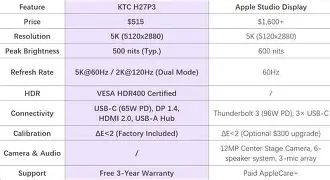
The KTC H27P3 is a 27-inch display that targets designers, photographers, and mixed-use professionals who want high resolution at a more accessible price point. Key attributes that matter to everyday buyers include its ability to present extremely sharp images (5K resolution in one mode), accurate color out of the box, and a modern connectivity suite including USB-C with power delivery. Typical real-world use cases include:
- Photo and video editing: high pixel density and broad color gamut help editors spot detail and ensure color fidelity for print and web work.
- Productivity and multitasking: 5K desktop space for multiple windows and large design canvases.
- Hybrid office/laptop docking: USB-C with PD enables single-cable docking for MacBooks and many Windows ultrabooks.
- Light gaming and media: dual-mode 1440p 120Hz operation offers smoother motion when the user wants it, while still delivering 5K for work.
Ugreen NASync DH2300 — who it’s for
The Ugreen NASync DH2300 is a compact, consumer-friendly two-bay NAS aimed at users who want a private cloud, automated backups, centralized photo libraries, and local media streaming without relying on public cloud subscriptions. Real-world buyers include families backing up phones and laptops, creatives who want local archive copies of large files, and small offices that need simple, low-power networked storage. Typical use cases include:
- Automated backups: scheduled backups from Windows, macOS, and mobile devices to a local appliance.
- Photo and media library management: local photo indexing, face or object recognition features (depending on firmware), and streaming to smart TVs or media players.
- Private cloud access: remote access to files without paying recurring subscription fees to third-party services.
- On-premises redundancy: RAID configurations (RAID 1) for mirroring, protecting against single-drive failure.
Detailed product analysis
Display quality and workflow impact — KTC H27P3
For people whose primary work is visual — photo retouching, color grading, UI/UX design — the monitor’s specifications are what most directly influence daily productivity. High resolution (5K at 60Hz) delivers greater pixel density and more workspace, while a 10‑bit panel and wide color gamut (near or full DCI-P3 and Adobe RGB coverage on some samples) reduce the need for constant color profiling. Factory calibration with a low ΔE value minimizes time spent calibrating before an accurate workflow is possible.
Ergonomics and connectivity matter too: USB-C with 65W power delivery effectively converts the display into a laptop dock, reducing cable clutter for mobile users. For those who prize a single-cable experience, the monitor can be the primary upgrade that improves comfort and efficiency.
Storage, backup, and media management — Ugreen NASync DH2300
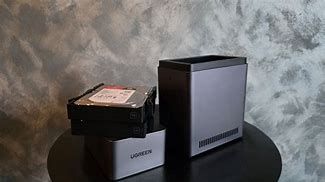
For users drowning in photos, video files, or slow cloud syncs, a NAS changes the workflow. The DH2300 focuses on accessibility and ease rather than enterprise-grade performance: it typically provides two SATA bays (supporting HDDs and SSDs), basic RAID options (RAID 0/1, JBOD), a modest but efficient CPU, and software for backups, media serving, and remote access. The device is optimized for low power consumption, quiet operation, and straightforward setup with companion apps.
Where a NAS shines is in automating backups (so versioned copies exist locally), offering faster LAN transfer speeds than many internet uploads, and giving a centralized place for large media libraries that multiple devices can access simultaneously. Creatives can offload large raw files to the NAS and keep working on the monitor, while families can centralize photos and stream to TVs.
Discover deals on Laptops & Computers — updated daily.
View Offers →Pros & Cons
KTC H27P3 — Pros & Cons
- Pros:
- Extremely high-resolution option (5K) for detailed work
- Strong color coverage and factory calibration for accurate color
- USB-C with power delivery simplifies laptop docking
- Dual-mode flexibility for 2K/120Hz gaming or motion work
- Cons:
- Standard stand may lack full ergonomic adjustments (height/swivel)
- No built-in speakers on many configurations
- Still a single device — does not solve storage or backup needs
Ugreen NASync DH2300 — Pros & Cons
- Pros:
- Easy-to-use on-premises storage that avoids recurring cloud fees
- Media server functionality and potential direct 4K HDMI output for local playback
- Two drive bays allow RAID 1 for basic redundancy or RAID 0 for capacity
- Energy-efficient and quiet for home use
- Cons:
- Not a monitor — does not improve visual workspace or color accuracy
- Networking limited to Gigabit Ethernet on many consumer models (may bottleneck multiple simultaneous 4K streams)
- Limited CPU/RAM compared with higher-end NAS units; not meant for heavy virtualization or container workloads
Comparison table
| Feature / Consideration | KTC H27P3 27 Monitor | Ugreen NASync DH2300 |
|---|---|---|
| Product type | 27" display (monitor) | 2-bay Network Attached Storage (NAS) |
| Primary purpose | Visual output: resolution, color accuracy, docking | Local storage, backups, media serving, private cloud |
| Who benefits most | Designers, photographers, power users who need sharp displays | Families, creatives, small offices that need centralized storage |
| Connectivity | USB-C (PD), DisplayPort, HDMI, USB hub | Gigabit Ethernet, USB 3.x ports, HDMI (on some models for direct playback) |
| Performance metric | Resolution (5K), color gamut, refresh mode (120Hz at 2K) | Drive speed/capacity, RAID options, network throughput |
| Ergonomics | Physical stand adjustments (varies), VESA mount | Small desktop footprint; no ergonomic relevance |
| Typical price role in setup | Primary productivity tool | Secondary infrastructure — protects and serves files |
Buying guide: which to choose (or both)?
Make the decision by mapping purchases to problems. Below are checklist questions and buying advice tailored to common situations.
Checklist: what does the user need most?
- Is the problem visual? If tasks are slowed by poor color, small workspace, or low resolution, a monitor upgrade is the right investment.
- Is the problem storage-related? If backups are fragmented, cloud fees are mounting, uploads are slow, or files are inaccessible to multiple devices, a NAS is the answer.
- Are both problems present? Many creators need both: a color-accurate monitor for editing and a NAS for archiving originals. Budget planning should prioritize the immediate productivity bottleneck first.
When to choose the KTC H27P3 (monitor)
Choose the KTC monitor when:
- Color-critical work (printing, retouching, color grading) requires accurate representation.
- Workflows would be notably faster with more screen real estate and higher pixel density.
- Single-cable convenience matters — for users who want a laptop dock/monitor combo via USB-C.
- Hybrid use: a machine that doubles as a productivity monitor and casual gaming display is desirable.
When to choose the Ugreen NASync DH2300 (NAS)
Choose the NAS when:
- The current backup strategy is fragile, missing, or expensive (multiple cloud fees).
- Large files (photos, raw video) are being constantly copied across multiple devices and a central repository would save time.
- Media streaming from local storage to a TV or media player is a priority and local transfer speed would improve playback and quality.
- On-premises control, privacy, and the ability to keep data off third-party cloud infrastructure are important.
Budget-minded approach
For many households or freelancers, buying both at once may be impractical. Prioritize whichever bottleneck most affects daily productivity: if time is lost due to slow editing previews or insufficient workspace, prioritize the monitor. If time is lost wrangling file transfers, dealing with cloud limits, or recovering from lost files, prioritize the NAS. Consider staged upgrades: buy the monitor now and add a NAS later, or start with modest external storage and move to a dedicated NAS as needs grow.
Technical points to watch
- For monitors: confirm native resolution and refresh behavior (the H27P3’s dual-mode can change the user experience); look for factory calibration reports or include a colorimeter in the budget if absolute color accuracy is required.
- For NAS: check network interface speed (1GbE vs 2.5GbE), expansion options, the available apps and OS ecosystem, and whether the device supports the backup clients and media protocols used in the user’s workflow.
- Compatibility: if the user relies on USB-C docking, verify the monitor’s PD wattage and ensure the NAS has the network and client software needed for their devices.
Scenarios and recommended setups
Practical examples help clarify the decision process:
Scenario 1 — Freelance photographer
Needs: accurate color grading, fast previews, dependable archive of RAW files.
Recommendation: prioritize a color-accurate, high-resolution monitor (like the KTC H27P3). After that, the Ugreen NASync DH2300 becomes the natural second purchase to centrally archive RAW files and automate backups.
Shop the latest Laptops & Computers picks on Amazon.
Browse Now →Scenario 2 — Family media hub
Needs: centralized family photos/videos, remote access, simple streaming to TV.
Recommendation: prioritize the NAS. The DH2300 provides a private, low-cost cloud that reduces dependency on third-party paid services and provides easy streaming and centralized management.
Scenario 3 — Hybrid remote worker with a laptop
Needs: single-cable docking, extra screen real estate, occasional large file syncs.
Recommendation: the monitor with USB-C PD is likely the most impactful immediate upgrade — it simplifies the workstation and improves day-to-day productivity. If storage needs increase, add a NAS later.
Conclusion
Upgrading from a KTC H27P3 27 monitor to a Ugreen NASync DH2300 is not an upgrade in the traditional sense because the two products address different problems. The monitor improves visual workspace, color accuracy, and docking convenience; the NAS improves data management, backups, and media serving. The best approach is pragmatic: identify the current bottleneck in the user’s setup. If visuals and color fidelity limit productivity, the monitor deserves priority. If data backups, capacity, and centralized access are the issue, a NAS is the correct investment.
For most creatives, the optimal long-term configuration is complementary: a high-quality monitor for editing and a reliable NAS for storage and redundancy. Budget and immediate needs should determine which item to buy first, but the two devices together create a stronger, more resilient workflow than either can provide alone.