The Truth About the Hl L2390Dw Hl L2395Dw: Pros, Cons, and Verdict
Category: Electronics
Introduction
The Brother HL-L2390DW and HL-L2395DW are compact monochrome laser machines that have circulated widely in home office and small-office markets. Marketed toward users who need reliable black-and-white printing with basic multifunction capabilities, these models often attract buyers who prioritize text quality, footprint, and cost of ownership. This article examines both machines in detail, comparing their core capabilities, real-world performance, and the trade-offs buyers should consider before choosing either model.
At a glance: what these printers are designed to do
Both the HL-L2390DW and the HL-L2395DW are aimed at users who require dependable monochrome output, quick setup, and a small physical footprint. They are not designed to compete with color laser or high-volume production devices. Instead, they target:
- Home offices and students who print essays, reports, and homework.
- Small businesses that need invoices, contracts, and administrative paperwork.
- Users who want occasional scanning and copying without a separate device.
Detailed product review and analysis
Design and build
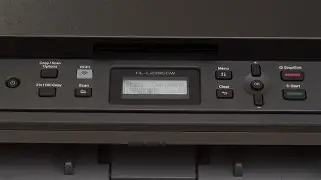
Both models share a compact, utilitarian design. The chassis is typically plastic but feels solid enough for daily use. The control area is minimal—sufficient for basic copying and scanning tasks. The printers are small enough to sit on a shelf or under a desk, which is important for users with limited workspace. The input and output trays fold in neatly to reduce the footprint when not in heavy use.
Printing quality and performance
Text output from both machines is crisp and legible—exactly what buyers expect from a monochrome laser. Fine fonts, line art, and business documents print with a professional appearance; this makes these models a reliable choice for letterheads, legal documents, and forms. The printers warm up quickly and handle single- and multi-page jobs with predictable consistency.
For most home and small-office workflows, print speed feels adequate. These models deliver steady throughput for batch document jobs; however, they are not optimized for heavy-duty, continuous printing the way a dedicated office laser would be. If a user routinely prints large volumes of multi-page manuals or shipping labels, a higher-capacity office printer may be more appropriate.
Scanning and copying
Both printers include flatbed scanning and copying functionality, which is useful for digitizing paperwork, photos, and occasional receipts. The flatbed scanner performs well for single-page scans and delicate originals that should not go through an automatic feeder. Scans are suitable for searchable PDFs (when combined with the right software) and for archiving documents.
One of the common differentiators between similarly named Brother models is the presence or absence of an Automatic Document Feeder (ADF). For buyers who routinely scan multi-page documents, an ADF is a convenience that saves time—without it, multi-page scanning becomes a manual two-hand operation that is time-consuming. Confirming the specific model’s ADF capability is important when purchasing.
Connectivity and mobile printing
Wireless networking is a core selling point for these models. They support standard wireless printing from laptops and mobile devices, and they typically integrate with popular mobile printing technologies. USB connectivity ensures a direct local connection for users who prefer tethering. Networked printing is straightforward for households with multiple users, and small teams can share a single device without much configuration fuss.
Consumables and running costs
A critical consideration for any laser printer is the cost of replacement toner and how often it must be changed. Monochrome lasers tend to offer better long-term value per page than inkjets for users with steady black-and-white print volumes. Buyers can usually choose between standard and high-yield toner cartridges depending on how frequently they print. Using high-yield cartridges and remanufactured or third-party options can reduce per-page costs, but buyers should weigh warranty and reliability implications when selecting consumables.
Discover deals on Electronics — updated daily.
See Deals →Software and ecosystem
Both models work with common printer drivers and vendor utilities that facilitate scanning to a computer, mobile printing, and basic device management. For users who rely on cloud workflows or document management systems, compatibility with scanning software and the ability to save to PDF are useful. Setup wizards make installation on Windows and macOS straightforward, although timesaving features like OCR and integrated cloud scans depend on the installed software bundle.
Reliability and maintenance
In real-world use, owners report steady reliability for routine tasks. Maintenance is minimal: replace toner, clear occasional paper jams, and perform periodic cleaning. For small offices where downtime hurts productivity, having a reliable basic monochrome printer is valuable; these Brother models typically deliver that consistent uptime when not pushed beyond their intended duty cycles.
Pros & Cons
Brother HL-L2390DW
- Pros: Compact footprint suitable for small spaces; strong text print quality; wireless printing support; low-maintenance operation for moderate use; flatbed scanner for occasional single-page scanning.
- Cons: Monochrome only (no color); limited multifunction conveniences compared with larger MFPs; fewer advanced scanning features if ADF is not included; toner costs add up for high-volume users.
Brother HL-L2395DW
- Pros: All the strengths of the L2390DW with added convenience features (improved control panel and scanning workflows in some configurations); suitable for small offices that need occasional multi-page handling if an ADF is included in the configuration; reliable monochrome output.
- Cons: Still monochrome-only; physical design remains compact at the cost of smaller paper handling capacity relative to office-class printers; not the best fit for heavy multi-user offices with large daily page counts.
Feature comparison
| Feature | HL-L2390DW | HL-L2395DW |
|---|---|---|
| Product type | Monochrome laser, compact MFP (print/scan/copy) | Monochrome laser, compact MFP with enhanced scanning options |
| Color | Black & white only | Black & white only |
| Automatic duplex | Yes | Yes |
| Scanner | Flatbed scanner | Flatbed scanner; certain configurations include an Automatic Document Feeder (ADF) |
| Connectivity | USB, Wi‑Fi, mobile printing support | USB, Wi‑Fi, mobile printing support; some variants add convenience features in the control panel |
| Ideal use case | Home office, students, light business printing | Home office, small business, users who want occasional multi-page scanning |
| Strength | Simple, reliable, good text quality | Similar strengths with extra scanning convenience |
Real-world use cases
Home office and students
These printers excel in scenarios dominated by text documents—essays, reports, and legal forms. Students appreciate the low running cost per page for black-and-white assignments. The compact size allows placement in dorm rooms or apartments without occupying much space.
Small business and remote professionals
For solo professionals and small businesses, the machines offer dependable invoice and contract printing, with duplex capability for multi-page documents. The scanning features enable digitizing receipts, client forms, and signed contracts. If multi-page scanning is frequent, choose the variant with an ADF or consider pairing the printer with a dedicated scanner.
Shared household printer
Families that share a single device for schoolwork, bills, and personal documents will find the wireless connectivity and straightforward operation convenient. The printers work well in mixed-device environments where laptops, tablets, and smartphones all need easy access to printing.
What buyers typically care about (and how these models measure up)
- Print quality: Buyers want crisp, reliable text. Both models deliver this well.
- Running costs: Toner cost per page matters. These mono lasers usually beat color inkjets on cost-per-page for black-and-white output, and high-yield toner options reduce consumable spend.
- Speed and throughput: Users want no bottlenecks. Both models handle typical small-office loads; heavy continuous print workloads may require a higher-end device.
- Connectivity and ease of setup: Straightforward wireless setup and mobile printing are important; both models are user-friendly in this regard.
- Multifunction capabilities: Buyers who scan many multi-page documents should confirm whether the HL-L2395DW or the specific configuration includes an ADF; otherwise, scanning remains a manual process.
- Footprint: Compactness is a plus for constrained spaces; both printers are space-efficient.
Buying guide: how to choose between these two models
1. Assess print volume and duty cycle needs
Estimate monthly printing. If monthly output is moderate (a few hundred pages), these models are appropriate and cost-effective. For several thousand pages per month, look at higher-capacity office lasers to reduce wear and maintenance needs.
2. Decide whether multifunction convenience matters
If the ability to quickly scan multi-page documents is critical, prioritize the model or configuration that includes an Automatic Document Feeder (ADF). For occasional single-page scanning, the flatbed scanner is sufficient.
3. Consider per-page cost and toner options
Look into both standard and high-yield toner cartridges. High-yield units reduce frequency of cartridge changes and lower per-page costs. Factor in the availability and warranty implications of third-party or remanufactured toner if pursuing lower running costs.
4. Confirm connectivity and compatibility
Ensure the device supports the network and devices in use: Wi‑Fi standards, USB, AirPrint for Apple devices, and adequate driver support for the operating systems in the environment. For shared printers, reliable wireless setup and stable connectivity are essential.
Find top-rated Electronics products at great prices.
View Offers →5. Evaluate physical placement and paper handling
Measure the space where the printer will sit and ensure the input/output trays and any extended paper paths will not be obstructed. If larger paper trays or higher capacity are needed, consider business-class models.
6. Check warranty, service, and support
Look into manufacturer warranty terms and the availability of local service or replacement parts. For businesses, a plan that minimizes downtime (on-site support or quick replacement options) can be worth the extra cost.
Common buyer questions
Can these printers handle photos?
Monochrome lasers are not designed for full-color photo printing. Black-and-white photo-style images render in grayscale and can look acceptable for reference or archival purposes, but for photographic or color marketing materials, a color inkjet or color laser is a better choice.
Are there energy or environmental considerations?
Laser printers use a fuser element that consumes energy to fix toner to paper. For intermittent printing, the warm-up time and energy draw during warm-up are worth noting. Some buyers offset this by choosing energy-saving settings or scheduling bulk printing to minimize warm-up cycles. Also consider recycling programs for toner cartridges.
Is mobile printing supported?
Yes—these models typically support standard mobile printing protocols, allowing printing from smartphones and tablets. Verify compatibility with specific apps or corporate print servers if that is required.
Conclusion
The Brother HL-L2390DW and HL-L2395DW occupy a useful niche: compact, reliable monochrome laser devices that deliver professional-looking text, straightforward wireless connectivity, and practical multifunction tools for users with moderate printing needs. For home offices, students, and small businesses that prioritize crisp black-and-white documents and low fuss operation, either model can be a sensible choice.
The decisive factors are scanning needs and expected print volume. If multi-page scanning is frequent, select the configuration that includes an Automatic Document Feeder or opt for the HL-L2395DW variant that provides that convenience. If the workflow revolves around occasional printing and single-page scans, the HL-L2390DW remains a compact, competent option.
Ultimately, buyers should weigh the total cost of ownership—toner, maintenance, and expected lifespan—against the convenience and footprint. For many small-scale users, these machines represent a balanced solution: efficient, dependable, and tailored to monochrome document workflows without unnecessary complexity.